

What data reveals about passive video ads, immersive experiences and the future of physical advertising.
In July and August 2026, LOOOK.AI put two advertising formats to the test: an interactive AR and AI experience and a standard promotional video commonly used by brands. Both appeared in the same out-of-home and retail placements, allowing us to compare how people responded to immersive and passive content.
Each format ran for 19 days with an identical weekday distribution. Using computer vision and retail analytics, we analyzed more than 250,000 interactions under comparable conditions.
The results reveal how deeply audiences engage with each format and what this could mean for the future of out-of-home advertising.
7 Seconds Versus 0.5 Seconds
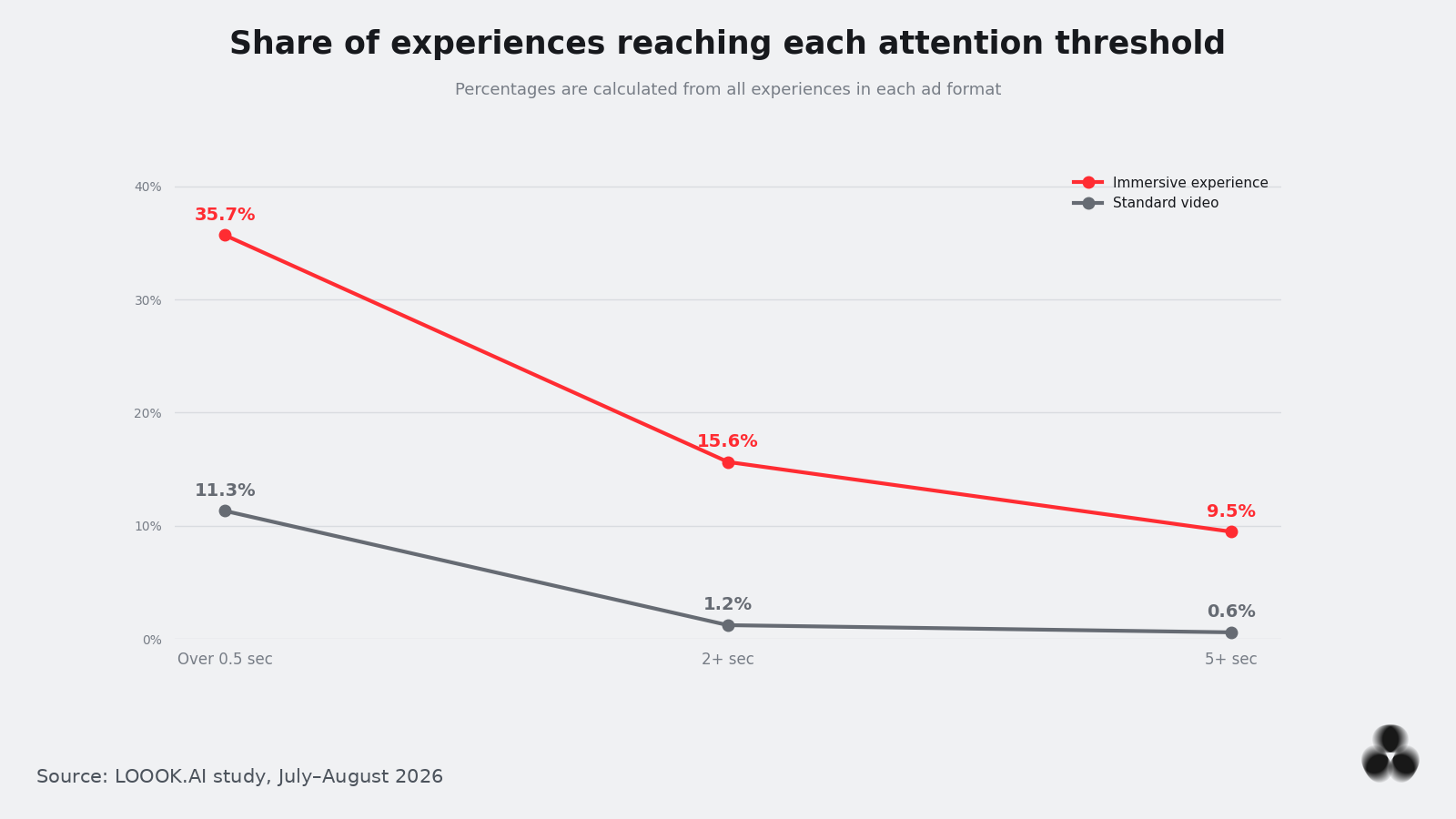
The immersive experience generated an average engagement time of seven seconds. By contrast, 88.7% of detected contacts with the standard video ended within 0.5 seconds. The immersive format was 3.2 times more likely to hold attention beyond that first half-second, revealing a difference not only in duration, but also in the quality of attention.
An average can hide very different behaviors. Among immersive contacts, 64.3% were passersby who stayed for less than 0.5 seconds, 20% gave the content short attention, and 15.6% actively explored the experience for more than two seconds. By comparison, 89% of video contacts were passersby, 10.1% gave the content short attention, and only 1.2% actively explored it.
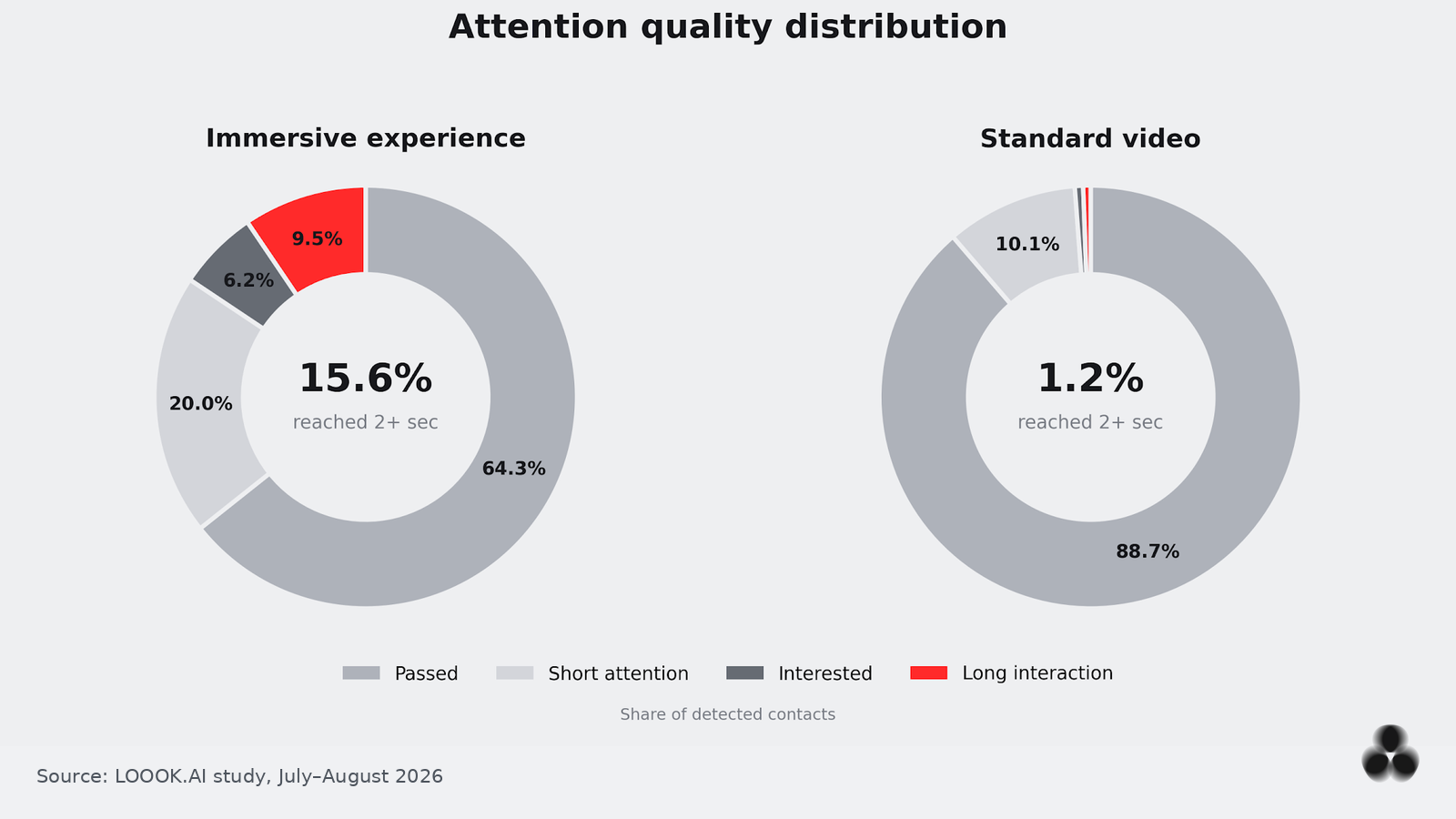
This is not only a difference in the length of attention, but also in its quality. Standard video produced consistently shallow attention. The immersive experience included a realistic share of passersby, but also achieved a level of deep engagement that video could not. In a high-traffic location, even the 15.6% who engaged deeply can represent dozens or hundreds of potential customers each day.
Measure the Quality, Not the Quantity, of Views
Traditional out-of-home measurement often treats every visual contact as equal, even though some may be accidental. Brands should instead use a system that measures the quality of each contact through the depth of attention:
- Passed: 0–0.5 seconds. People who briefly glanced at the screen while passing.
- Short attention: 0.5–2 seconds. People who noticed the content and moved on.
- Interested: 2–5 seconds. People who paid attention and lingered near the screen.
- Long interaction: 5+ seconds. People who remained engaged in front of the screen.
For more detailed reporting, long interactions can be divided into 5–7, 7–10, 10–15, 15–20, and 20+ second intervals.
This gradation allows brands to measure and compare the quality of placements, content, and audience affinity. Instead of knowing only that someone turned toward a screen, they can see how far attention progressed, where it was lost, whether the content worked, and how relevant it was to the audience. A single binary metric, seen or not seen, cannot reveal what attracted attention or caused people to engage.
Depersonalized computer vision can measure these attention tiers without identifying individuals. An immersive experience is not required: the same analytics can be connected to a standard digital billboard, storefront display, or retail screen.
The Future of Programmatic OOH Is Audience-Aware
Attention depth is only part of the opportunity. Brands also need to understand which audience groups are present around a placement and when they appear. Using depersonalized, GDPR-compliant AI and computer vision, screens can analyze broad audience characteristics and learn recurring patterns without identifying individuals.
Today, most digital billboards follow a fixed advertising schedule: shampoo in the morning and beer in the evening, regardless of who is actually nearby. The next generation of programmatic outdoor advertising should work more like Google Ads. A billboard could learn which audiences are present, measure which content earns their attention, and automatically adapt its schedule.
For example, if women are the predominant audience in the morning, the screen could prioritize relevant campaigns. If that audience changes ten days later and older men become the dominant group, the content schedule could adapt immediately. Advertisers would then pay not simply for a time slot, but for relevant advertising time. A campaign might not run at all on a day when its intended audience is absent, making outdoor advertising more targeted, responsive, and accountable.
Four Principles for Immersive Outdoor and Retail
These findings suggest four practical principles for the next generation of physical advertising.
1. Use Immersive Content Where the Consumer Can Become Part of the Message
If people can naturally become the focus of the visual, try on a product, or explore it personally, the placement is a strong candidate for an immersive experience. Interactivity should support the product and campaign idea, rather than exist only as a novelty.
2. Make Engagement Quality the Core Metric
Do not evaluate physical advertising only by the number of contacts. Measure how many people move from an accidental glance to short, meaningful, sustained, and deep attention. Engagement quality reveals what impression counts cannot.
3. Analyze the Real Audience and Apply Dynamic Targeting
Use depersonalized audience patterns to understand who is present, when they appear, and which content earns their attention. Apply these insights to dynamic scheduling instead of showing the same creative in every location and time slot.
4. Conduct New Consumer Research Before Future Placements
Study which formats people are genuinely willing to engage with, including the type of experience, creative structure, screen size, and media environment. These findings should inform both the next campaign and the selection of future placements.
The future of out-of-home advertising will not be defined by impressions alone, but by the ability to attract attention, deepen it, and turn it into meaningful action.
How LOOOK.AI Helps Improve DOOH Advertising Effectiveness
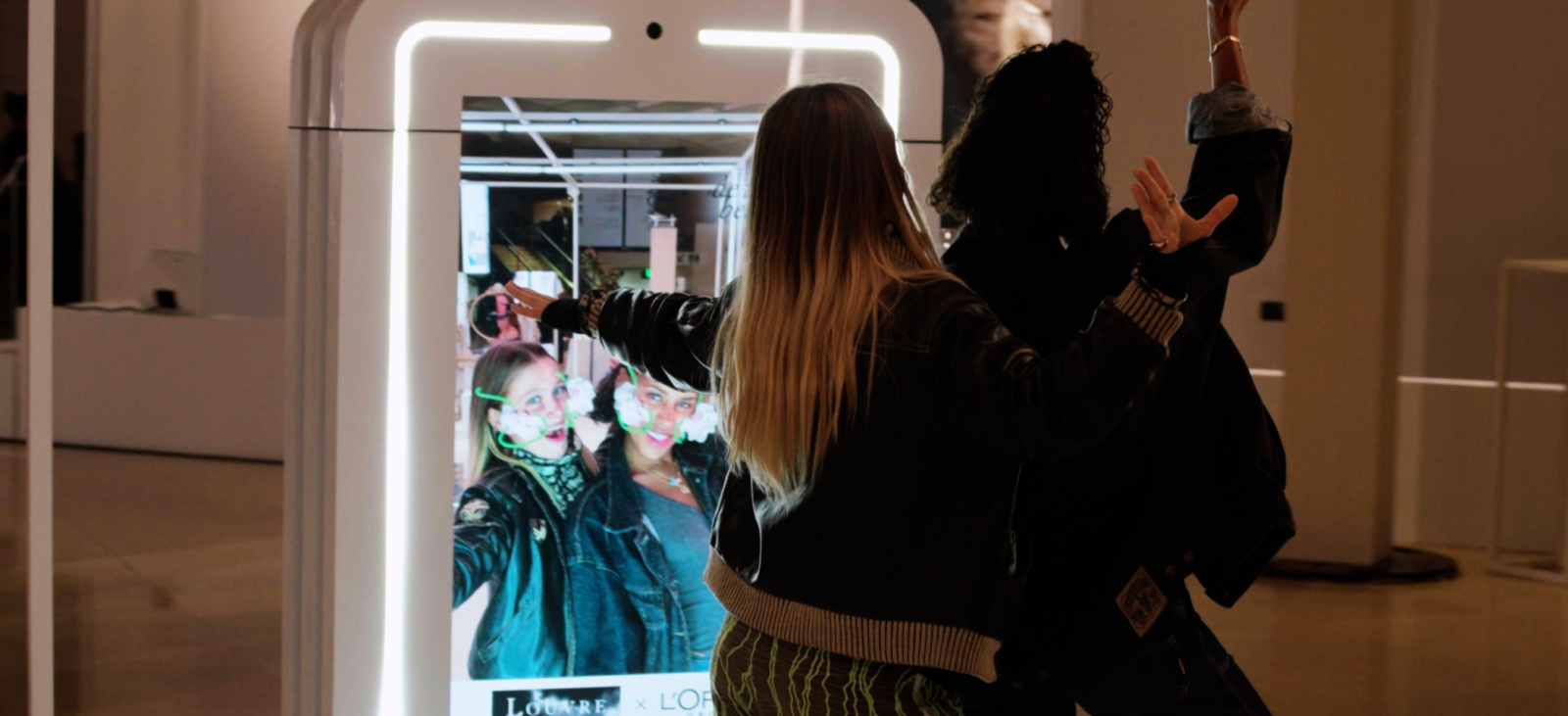
LOOOK.AI turns digital out-of-home screens into interactive experiences that invite people to do more than glance at an ad. With AR and AI features such as virtual try-on, personalized content, and product recommendations, brands can make campaigns more relevant and encourage deeper engagement. The platform’s analytics help teams understand how people respond, while remote management makes it easier to update experiences across screens and locations. Together, these tools help brands evaluate campaign performance and make better informed decisions about their content and placements.
With LOOOK.AI, brands can:
- Encourage active participation with interactive AR and AI experiences.
- Personalize the experience with virtual try-on, recommendations, and real-time content.
- Measure engagement quality using metrics such as interaction time and experience usage.
- Compare campaign performance across content, screens, and locations.
- Update campaigns remotely to keep content aligned with current products and promotions.
- Use privacy-conscious analytics to understand engagement without identifying individuals.