
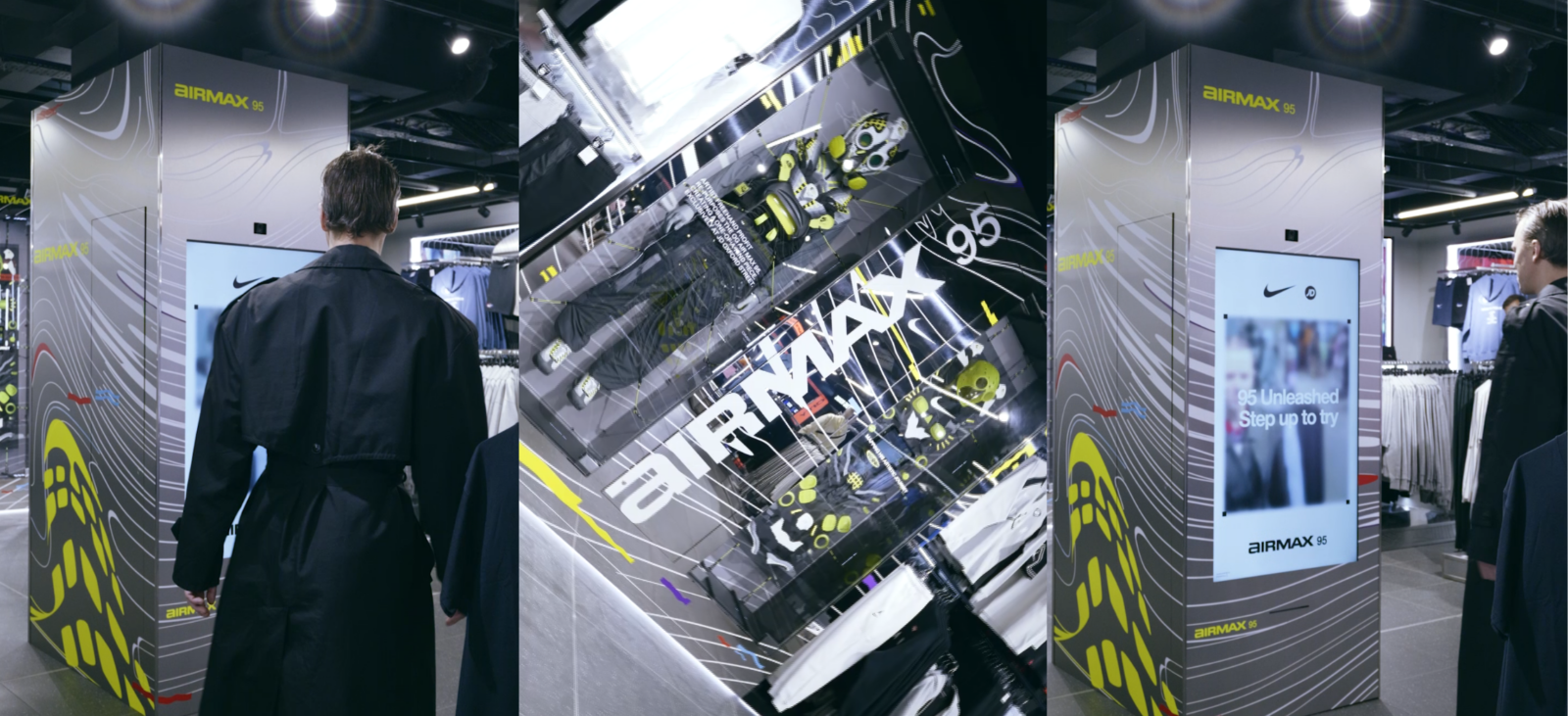

Retail stores compete on more than just product or price. As shoppers switch between online and in-store shopping, brands need to make their physical locations more lively and responsive, similar to the online experience.
Interactive retail displays meet this need by offering two-way experiences rather than simply showing static content or looping videos. They encourage shoppers to engage, explore, try products, compare options, scan, personalize, and discover. These displays turn physical stores into places that combine digital interaction with the hands-on experience of in-person shopping.
Interactive displays help retailers by making it easier for customers to discover products, boosting engagement, collecting shopper data, and linking in-store activity to marketing efforts.
Key Takeaways
- Interactive retail displays turn stores into more engaging, phygital environments by creating two-way shopper interaction instead of one-way messaging.
- Unlike traditional digital signage, they support active participation such as browsing, scanning, comparing, virtual try-on, and guided discovery.
- Common formats include touchscreens, AR mirrors, smart mirrors, storefront displays, kiosks, AI-powered screens, and immersive installations.
- The main value comes from stronger product discovery, more personalized experiences, better storefront engagement, and more measurable campaign performance.
- Interactive retail displays work especially well in beauty, fashion, eyewear, luxury, consumer electronics, department stores, malls, airports, and pop-up activations.
- They also make physical retail easier to measure through metrics like dwell time, interaction rate, engagement depth, foot traffic uplift, QR scans, and product-level interest.
- For brands, ROI is not only about direct sales, but also about engagement quality, discovery, campaign impact, and actionable in-store insights.
What Are Interactive Retail Displays?
Interactive retail displays are digital in-store formats that respond to customer actions rather than simply broadcasting content. Retailers use touchscreens, smart mirrors, AR displays, self-service kiosks, storefront installations, and AI-enabled screens to achieve this.
The distinctiveness of these displays lies in the two-way exchange between the shopper and the brand, which goes beyond mere screen presence. This interaction can occur through touch, motion, gestures, QR codes, computer vision, augmented reality, mobile devices, or AI features.
This two-way interaction changes what customers can do in physical stores. Interactive in-store displays let customers do more than just watch—they can browse more products, try items virtually, get recommendations, compare choices, find product details, or join in special brand experiences for launches or campaigns.
What Is a Phygital In-Store Experience?
A phygital experience blends physical retail with digital features, seamlessly integrating the speed, personalization, and flexibility of online shopping into the store.
For shoppers, phygital experiences provide clear benefits: stores become easier to navigate, offer access to richer content, provide more product choices, and help customers shop with greater knowledge and assurance, rather than relying solely on traditional displays or staff.
For brands, phygital retail delivers tangible benefits: it makes stores easier to measure, serves as a dynamic media channel, and enables brands to track engagement, tell stories, educate shoppers, and drive sales more effectively.
Interactive Store Displays vs Traditional Digital Signage
Traditional digital signage usually works one way, showing brand videos, promotions, product ads, prices, or store info. While it looks better than static signs, customers mostly just watch rather than interact.
Interactive retail displays are made to get shoppers involved. Instead of just watching, people can browse colors, compare styles, try on looks virtually, answer questions, scan codes, join brand experiences, or get personalized product suggestions.
This difference significantly impacts business results.
Traditional signage works well for getting noticed and sharing the same message with everyone. Interactive displays are better for engaging shoppers, helping them discover products, personalizing their experience, and tracking their interactions.
| Category | Traditional Digital Signage | Interactive Retail Displays |
| Interaction | One-way communication | Two-way engagement |
| Shopper role | Mostly passive | Actively involved |
| Core goal | Show content | Create participation |
| Experience type | Static or scheduled | Responsive and interactive |
| Personalization | Minimal | Possible and scalable |
| Typical actions | View | Explore, compare, scan, try |
| Data value | Limited reporting | Rich engagement insights |
| Best use | Promotions and awareness | Discovery, engagement, measurable experiences |
Put simply, digital signage sends a message to shoppers, but interactive retail displays start a conversation.
Types of Interactive Product Displays
There is no one-size-fits-all solution. The right interactive retail display depends on the store type, customer journey, and business goals. Some displays help with product discovery, while others are better for trying on items, offering services, personalizing experiences, or building brand engagement.
Interactive Touchscreens
Interactive touchscreens are one of the most common types in retail. They are used for browsing products, digital catalogs, endless aisle shopping, and letting customers explore on their own. They work well when brands want to showcase more products or information than can fit in-store.
AR Mirrors and Smart Mirrors
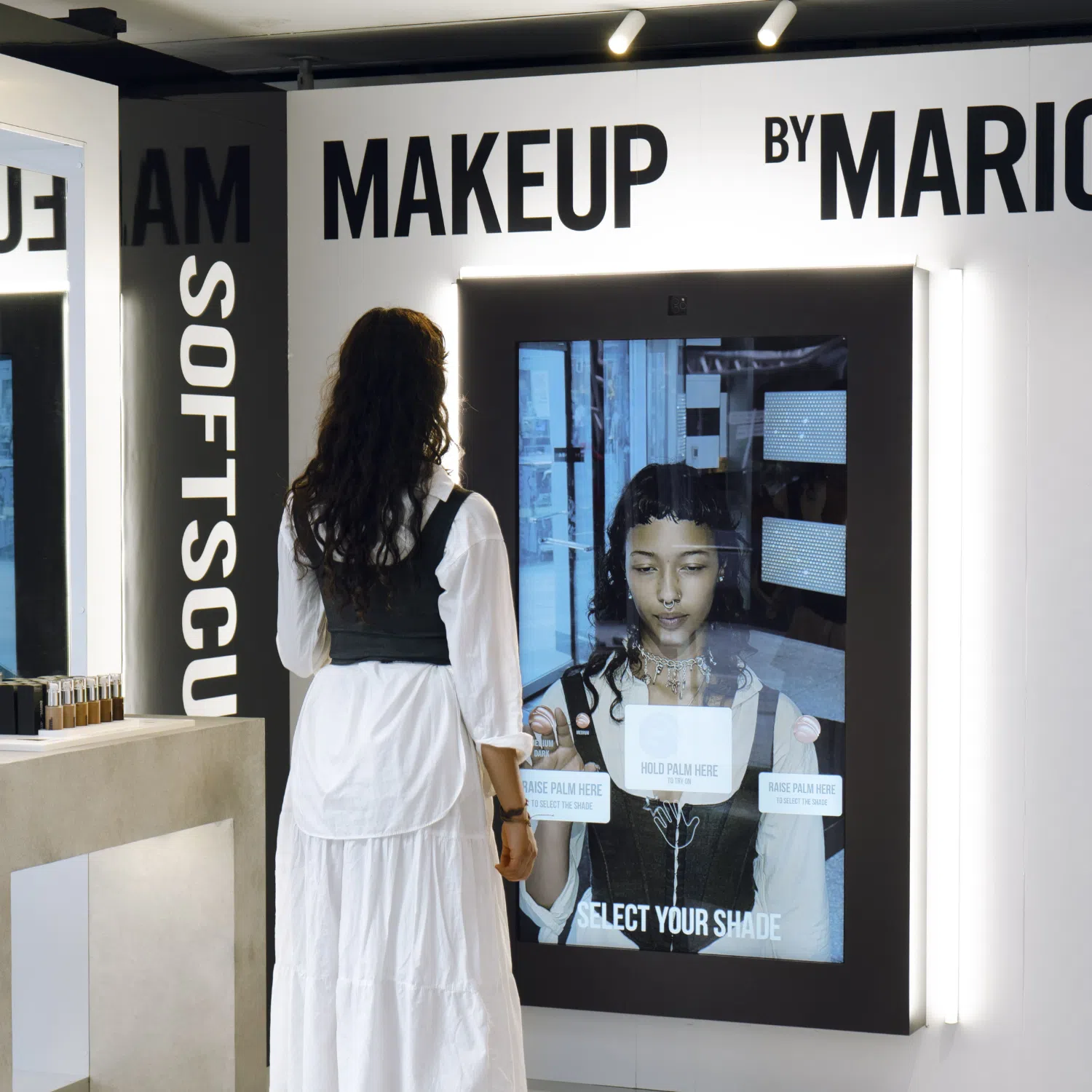
AR mirrors and smart mirrors work especially well in beauty, fashion, eyewear, and accessories. They let shoppers try on products virtually, compare styles, get recommendations, and enjoy immersive brand experiences. For shoppers, these mirrors make it easier and more fun to discover new products. For brands, they boost engagement and provide measurable results.
Interactive Storefront Displays
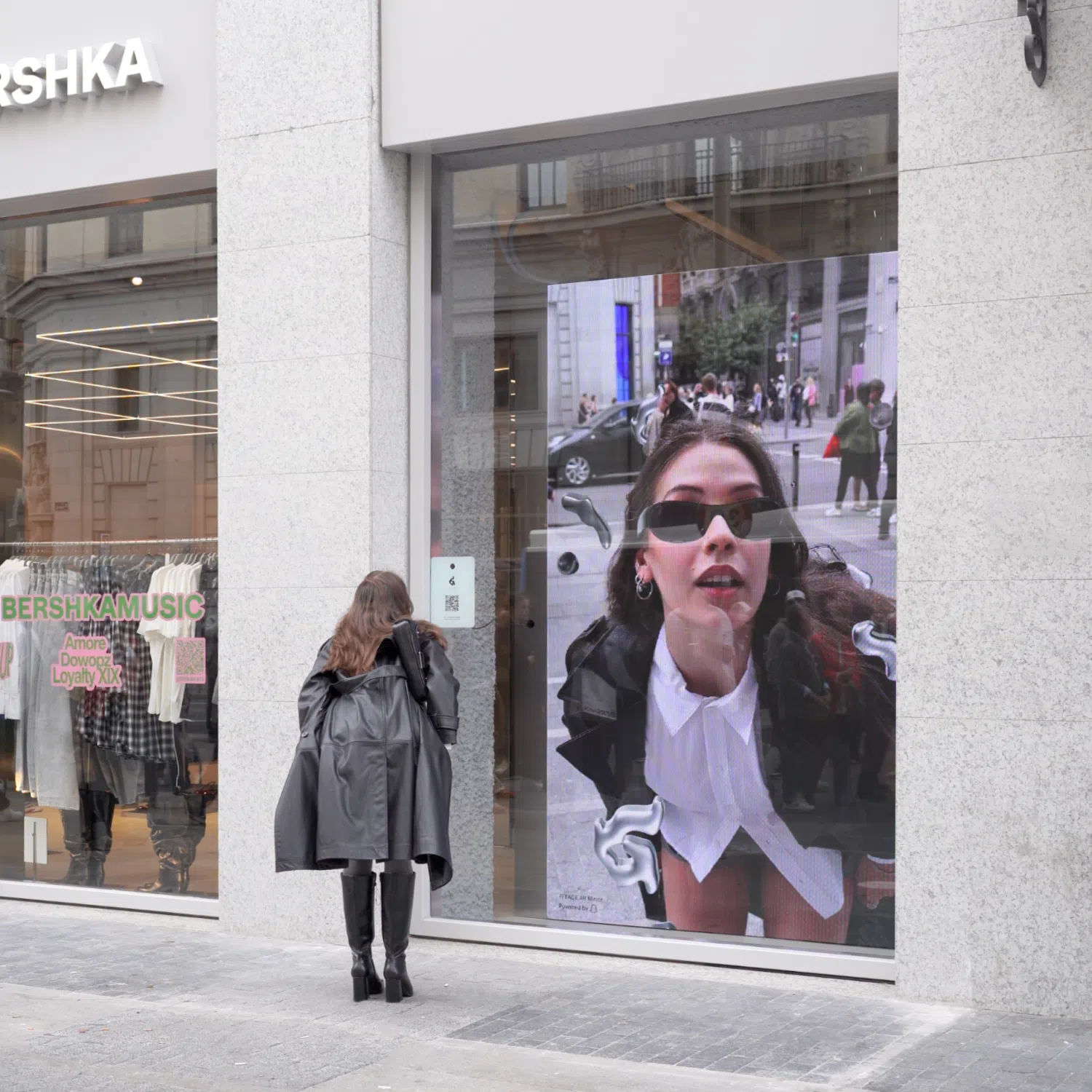
Interactive storefront displays add digital engagement to store windows or screens facing outside. They catch the attention of people walking by, make a strong first impression, and help bring more people into the store. These displays are especially useful for flagship stores, busy locations, new campaigns, and special retail events.
Retail Kiosks and Self-Service Stations
Retail kiosks and self-service stations help with practical tasks like looking up products, placing orders, finding your way, booking appointments, accessing loyalty programs, or making service requests. They make shopping easier and faster, so customers do not have to depend only on store staff.
AI-Powered Retail Screens
AI-powered retail screens are more flexible because they can dynamically change what they display, offer smarter product suggestions, and provide brands with better insights into customer interactions. These screens respond to shoppers and use data rather than just showing the same content over and over.
Immersive Display Installations
Immersive display installations are often used for product launches, pop-ups, and special campaigns. They grab attention, create memorable brand moments, and encourage sharing by using big screens, motion effects, AR features, or brand storytelling to make the store more exciting.
Choosing the Right Format
Each type serves a different purpose: touchscreens help with discovery, AR mirrors let people try on, storefront displays bring in more visitors, kiosks add convenience, AI-powered screens personalize the experience, and immersive installations make campaigns stand out. The best choice depends on what the brand needs, not just the hardware.
Technologies Behind Interactive Retail Displays
What shoppers see is just one part of the system. Interactive displays use different technologies that shape how they work and what value they offer.
- Touch technology supports direct browsing and navigation. It is still one of the most familiar and practical forms of interaction in retail.
- Gesture recognition and motion tracking enable hands-free experiences, which are useful in storefronts, crowded areas, or premium settings where a smooth interaction experience is preferred.
- Computer vision helps the system detect presence, understand interaction trends, or support try-on and movement-based experiences.
- Augmented reality enables customers to see digital overlays in real time, such as makeup shades, eyewear frames, accessories, or other products mapped onto their image.
- Artificial intelligence powers recommendation engines, dynamic content, personalized experiences, and advanced in-store analytics. It also helps connect the in-store experience to the shopper’s phone, making it easier to continue the journey after leaving the store.
- Cloud-based content management systems enable brands to update experiences remotely, manage content across multiple locations, and maintain campaign flexibility.
Key Features and Use Cases of Interactive Retail Displays
The value of interactive retail store displays goes beyond the technology. Their real strength lies in features that enhance the shopping experience and give brands greater flexibility, insights, and control over in-store operations. These displays work best when designed for specific uses, such as product discovery, attracting people to the storefront, or running campaigns.
Product Discovery
Interactive retail displays are great for helping shoppers discover products. When space is limited, these displays let people see more options, compare products, and get additional information. Quick interactions, easy navigation, and helpful content make browsing simpler and more useful.
Virtual Try-On and Visualization
Virtual try-on is a leading use, especially in beauty, eyewear, fashion, and accessories. It lets customers see how products look on them in real time, with real-time feedback, product previews, and personalized suggestions. Interactive storefront displays turn passive windows into active touchpoints. They attract passersby, invite participation, and give compelling reasons to enter the store. Immediate interaction, strong visual impact, and flexible content updates are key in this use case.
Campaign Activations
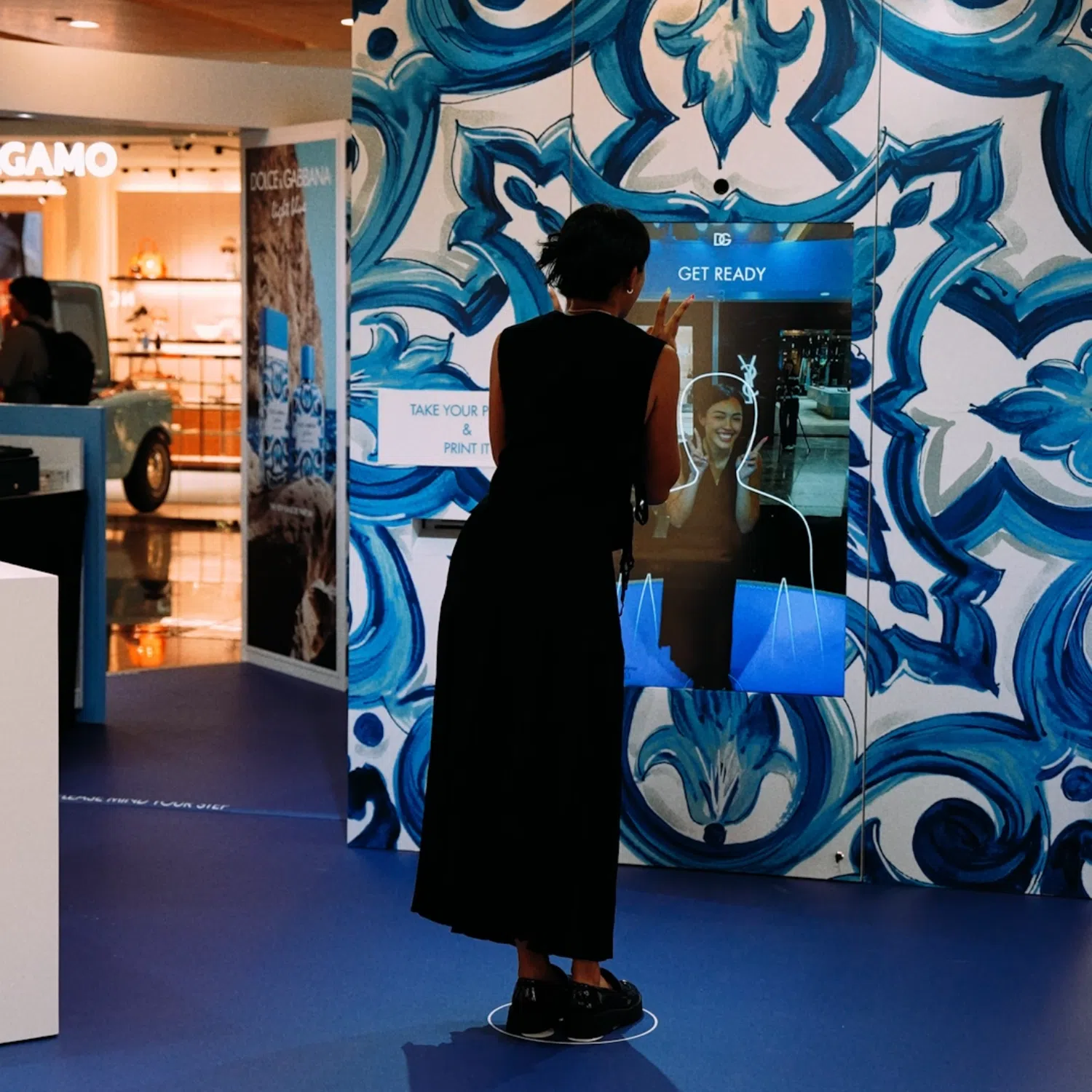
For launches, pop-ups, and special events, interactive displays create experiences that people remember and want to share. Their value comes from dynamic content, immersive interactions, and more effective ways to measure engagement than traditional displays.
Endless Aisle and Assisted Selling
Interactive displays are also helpful for endless aisle shopping and assisted selling. They let retailers display products even when they are out of stock and help shoppers compare, get recommendations, or find matching items. Guided selling and product-level interaction matter most here.
Wayfinding and In-Store Convenience
In big stores, malls, or airports, interactive displays help you find your way and complete self-service tasks. They make it easier for customers to find departments, locate products, or use services quickly. Fast interactions and clear steps are important for this use.
Gamified and Experiential Engagement
Some interactive retail displays are designed to grab attention and engage customers. Gamified and experience-based formats make stores more memorable, encourage sharing, and create stronger brand moments with quick interactions, lively content, and trackable engagement.
Industries Where Interactive Displays Work Well
Interactive retail displays work well in many industries, especially where customers need to see products, compare options, personalize choices, or get guided help during their shopping journey.
- Beauty and cosmetics: One of the strongest use cases. Interactive displays can support shade comparison, virtual try-on, skincare education, and guided product discovery.
- Fashion and accessories: These formats let shoppers explore more styles, colors, and combinations than the physical store can display, making discovery more dynamic.
- Eyewear: Great for quick visual comparisons. Virtual try-on makes it easier to choose styles and reduces hassle.
- Luxury retail: Interactive displays support premium storytelling, personalization, and elevated service without making the experience overly transactional.
- Jewelry and watches: Interactive displays enable collection discovery, closer product viewing, storytelling, and, in some cases, virtual try-on.
- Consumer electronics: Useful for product education, feature comparison, and guided recommendations to help shoppers understand technical differences.
- Department stores and malls: Interactive displays support navigation, discovery, promotions, and cross-category browsing.
- Travel retail and airports: In busy areas, interactive displays enable quick discovery, multilingual communication, and branded engagement.
- Pop-ups and brand activations: Effective in temporary spaces focused on attention, participation, shareability, and measurable engagement.
Metrics That Matter: Dwell Time, Engagement, and ROI
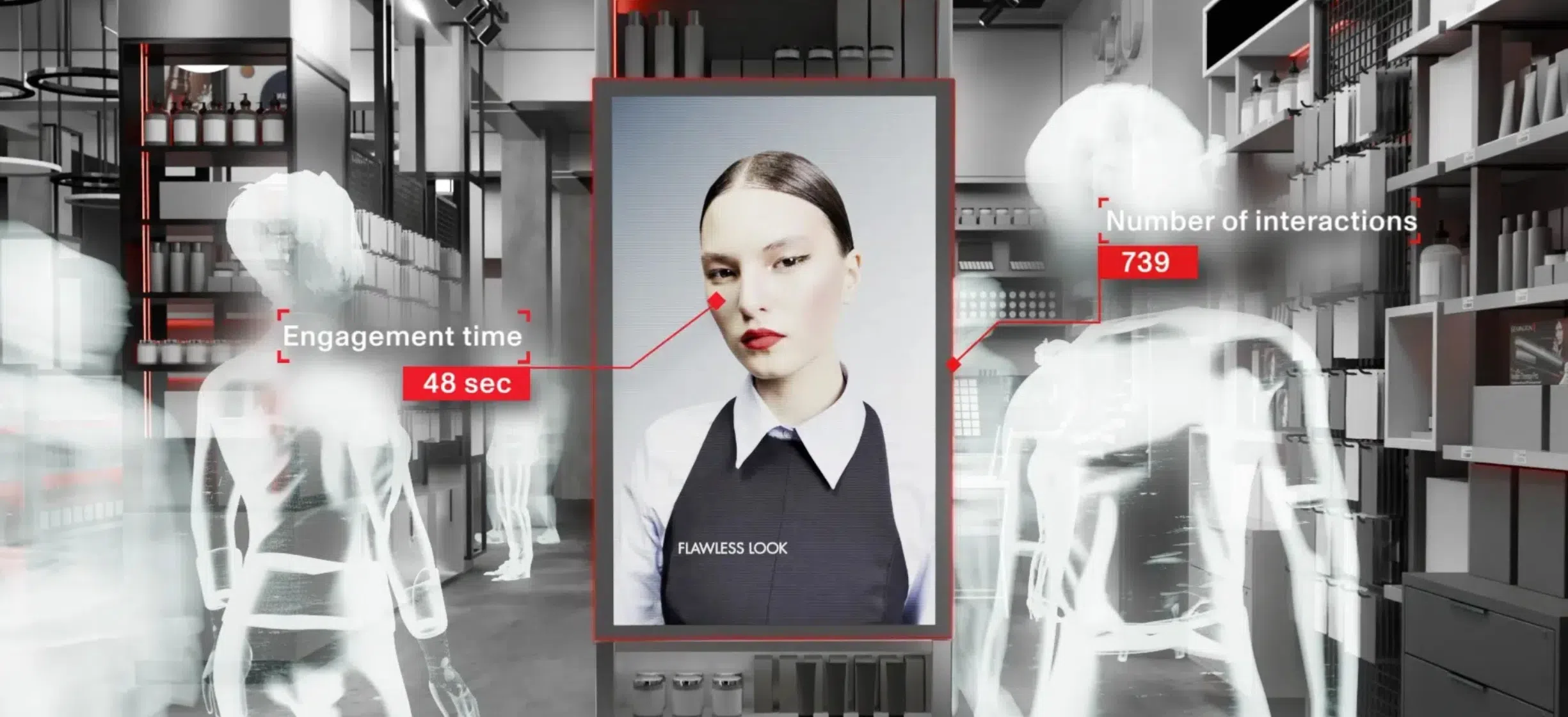
Interactive displays in retail let brands measure in-store performance much more accurately than traditional retail media. Instead of just looking at overall store results, brands can track shoppers’ interactions with each display or experience in real time. This makes it easier to analyze, improve, and link physical retail to real business goals.
One big advantage is that interactive retail displays make it easy to see how engaged shoppers are. Brands can measure how long people spend with a display, how many interact, and how deeply they go—like how many products they look at or how much of the experience they complete. This shows not just if the display was noticed, but if it really caught attention and inspired action.
These systems also help brands track specific shopper actions. Depending on the setup, brands can see which products generate the most interest, how many QR codes are scanned, how many photos are taken, how many pieces of content are completed, how many are shared, and how many assisted-selling actions are made. For storefront displays, they can even show if more people come into the store because of the display. This gives brands a clearer link between engagement and store visits.
This is why interactive retail displays are so valuable for measurement. They do more than support the customer experience—they improve it. They also provide better retail analytics. This means brands can measure ROI in more ways than just sales, such as better product discovery, greater participation, longer visits, stronger campaigns, and more useful in-store insights.
How to Choose the Right Interactive Store Display Strategy
The best place to start is with your business goal, not the technology.
If you want to bring more people into the store, focus on interactive storefronts. For better product discovery, use touchscreens or endless aisle displays. For immersive try-on experiences, try smart mirrors or AR solutions.
Retailers should also think about the store environment. Flagship stores, beauty counters, airport shops, and pop-ups all need different formats and setups.
It is important to look beyond just the screen. Good content, user-friendly design, analytics, remote management, and fitting into the shopper journey often matter more than the hardware itself.
How loook.ai Supports Interactive Retail Displays
loook.ai helps brands turn ordinary screens into interactive retail displays that support AR, AI, and measurable in-store engagement. Instead of requiring fully custom hardware, the platform can work with existing displays to create experiences such as virtual try-on, smart storefront activations, AI-powered mirrors, and interactive campaign formats. For retailers, the value is not only in making the store more engaging, but also in making it more measurable. loook.ai supports features like product-level interaction tracking, dwell time insights, remote content updates, QR-based journeys, and scalable rollout across locations. This makes it a practical solution for brands that want to create phygital retail experiences without treating interactivity as just a one-time visual add-on.
The Future of Interactive Retail Displays
Interactive retail store displays are part of a bigger shift in physical retail. Stores are becoming more connected, easier to measure, and more responsive to shoppers.
The next step will likely bring more AI-powered personalization, flexible content, and better links between stores and digital channels. Even now, it is clear that physical retail is no longer just about showing products. It is becoming a way for brands to interact directly with customers.
Conclusion
Interactive in-store displays are helping brands move from passive in-store media to more responsive, measurable, and experience-led environments. They create phygital journeys that bring digital functionality into physical retail in a way that feels useful, visual, and engaging.
The real value is not just in their modern look. These displays help shoppers find products, keep them in the store longer, boost engagement, and give brands better insight into in-store activity.
When done well, interactive retail displays do more than just decorate the store. They make the store an active part of the customer experience and a smarter part of the retail strategy.
FAQ
What business problems do interactive retail displays solve?
Interactive retail displays help brands address multiple retail challenges simultaneously. They can improve product discovery, increase shopper engagement, support guided selling, make stores more measurable, and help connect physical retail with digital marketing activity.
Which retail goals can interactive retail displays support?
They can support a wide range of goals, including foot traffic generation, product discovery, virtual try-on, campaign activations, assisted selling, omnichannel connection, and in-store analytics.
How do brands measure the performance of interactive retail displays?
Brands can measure dwell time, interaction rate, participation rate, engagement depth, product-level interest, QR scans, photo captures, shares, and sometimes downstream sales impact. This helps make physical retail more measurable.
What does ROI look like for interactive retail displays?
ROI is not only about direct sales. Brands often evaluate value through stronger engagement, better product discovery, longer dwell time, increased foot traffic, greater campaign visibility, and more actionable shopper insights.
Are interactive retail displays scalable across multiple locations?
Yes, if the solution supports centralized content management and remote updates. This is important for brands that want to run campaigns, refresh content, and monitor performance across stores without rebuilding each experience from scratch.
Do interactive retail displays require custom hardware?
Not always. Some solutions can work with existing screens and standard hardware setups, making deployment more flexible and cost-efficient for brands.
Are interactive retail displays useful only for temporary activations?
No. They can be used both for short-term campaigns and as long-term retail infrastructure. Some brands use them for launches and pop-ups, while others use them for ongoing product discovery, guided selling, and in-store engagement.