

Pop-up shop marketing is no longer just about opening a temporary retail space and hoping people walk in. It is a full campaign format that brands use to launch products, create cultural moments, drive foot traffic, collect leads, generate content, and test real-world response.
Pop-ups work because they combine limited-time urgency with high public visibility. When done well, they do more than sell for a few days. They create attention, spark social sharing, and produce measurable insights into how people interact with products in physical spaces.
Pop-up shop marketing keeps growing because brands see it as a real performance channel, not just a temporary retail format. AnyRoad found that 51% of companies plan to increase experiential marketing investment through 2026, while Adyen reports that 44% of shoppers still prefer in-store shopping. Technology makes pop-ups even more effective: Shopify has reported that shoppers were 27% more likely to place an order after interacting with a product in 3D and 65% more likely after viewing it in AR.
What Is Pop-Up Shop Marketing?
Pop-up shop marketing is the use of a temporary physical retail or brand space to promote products, engage customers, and create buzz around a campaign. A pop-up shop may last for a day, a weekend, a week, or a few months, but its temporary nature is part of what makes it work.
Unlike a regular store, a pop-up shop is usually built around a specific goal. That goal might be launching a new product, entering a new market, creating a branded experience, driving awareness during a key season, or building stronger emotional connection with customers.
The 7-day Ralph Lauren activation at Macy’s NYC turned the in-store experience into a shareable moment, with personalized digital photos as the most loved feature and organic UGC on Instagram and TikTok helping extend the campaign beyond the physical space.
This is what separates pop-up shop marketing from simple short-term retail. It is not just about having a place to sell. It is about using a temporary space as a high-impact marketing channel.
Brands often use pop-up retail marketing because it allows them to:
- create urgency with a limited-time format
- test products or locations before a larger rollout
- attract attention through novelty
- combine offline experience with digital engagement
- generate user-generated content and PR
- collect first-party data and campaign insights
Pop-up event marketing is especially effective because it brings the brand closer to the audience. Instead of asking people to imagine the value of a product online, brands can let them experience it in person.
Why Pop-Up Shop Marketing Works
Pop-up shop marketing works because it combines scarcity, experience, and visibility in one format. It gives people a reason to stop, interact, and remember the brand.
Limited-Time Experiences Create Urgency
A permanent store becomes part of the everyday background. A pop-up shop feels different because people know it will not be there forever. That limited-time aspect creates urgency. Customers are more likely to visit now, not later, because later might not exist.
This urgency can increase foot traffic, make launches feel more important, and encourage quicker decisions. For brands, that means the pop-up itself becomes part of the message: this is special, this is current, and this is worth seeing now.
Physical Activations Drive Stronger Engagement
Digital channels are crowded. People scroll fast, ignore ads, and move on quickly. A pop-up creates a physical moment where the brand can hold attention for much longer.
When visitors can touch products, try them on, interact with a display, or take part in an experience, engagement becomes deeper. That is why experiential retail marketing is such a strong fit for pop-ups. The physical environment gives brands more ways to make the interaction memorable.
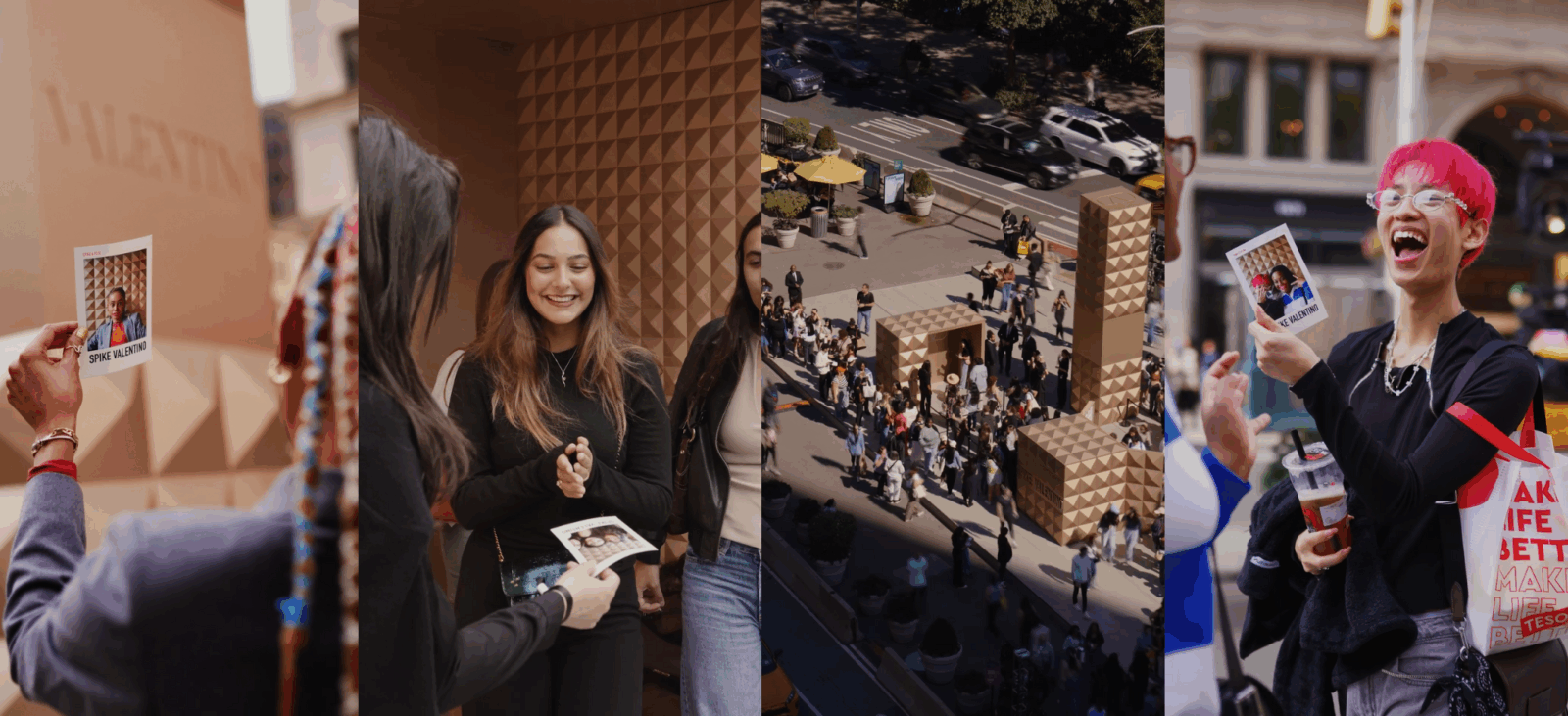
The Valentino x loook.ai pop-up at Flatiron Plaza drove around 1,500 activations in 2 days, with 1,579 branded photos printed and high shareability that helped boost interest in the campaign.
Pop-Ups Help Brands Generate Content and UGC
A good pop-up is not just a place. It is a content engine. Visitors take photos, record videos, share stories, and talk about the experience online. That turns one physical installation into content that keeps traveling far beyond the location itself.
This is especially valuable for brands that want social visibility. A well-designed interactive moment, whether it is a branded installation, AR try-on, or AR photobooth experience, can turn visitors into creators.
Temporary Retail Spaces Can Be Measured Like Performance Channels
One of the biggest shifts in modern pop-up retail marketing is that physical activations no longer have to be difficult to measure. Brands can now track engagement in much smarter ways.
Instead of only estimating success through sales or rough traffic numbers, they can measure interaction volume, dwell time, QR scans, lead capture, product interest, content sharing, and participation rate. This makes the pop-up shop more than a branding play. It becomes a measurable campaign channel.
How to Market a Pop-Up Shop
Knowing how to market a pop-up shop is just as important as designing the space itself. Even the most creative concept can underperform if people do not know about it or do not have a reason to visit.
- Pre-launch promotion: Build anticipation before the pop-up opens with social media teasers, countdowns, influencer or creator support, email campaigns, PR outreach, event listings, and local partnerships. The goal is not just to announce the pop-up, but to give people a clear reason to visit by showing what is happening, where it is, when it starts, and why it is worth their time.
- On-site experience design: Once visitors arrive, the experience needs to justify the visit. Use bold visual branding, a simple and intuitive customer flow, product demos or try-ons, shareable photo and video moments, QR codes that lead to offers or digital experiences, and clear calls to action. The stronger the interaction, the more value the pop-up creates for both the brand and the visitor.
- Post-event content and retargeting: A pop-up should continue working even after it closes. Brands can extend the campaign by reposting visitor content, turning the activation into paid social creatives, following up with captured leads, retargeting users who engaged through QR codes, and publishing recap content on the website. This helps turn a short-term activation into a longer marketing cycle and increases the return on the campaign.
Pop-Up Shop Marketing Ideas That Increase Engagement
If the goal is to increase customer engagement, brands need more than nice decor. They need experiences that invite action.
AR Product Try-Ons
AR try-on is one of the most effective pop-up shop marketing ideas for beauty, fashion, eyewear, and accessories. Instead of only looking at products, visitors can see how those products look on them in real time.
That makes the experience more personal and more useful. It also reduces hesitation and increases confidence, especially for products where fit, style, or color matter.
AI Photo Booths and Shareable Brand Moments
AI photo booths turn a pop-up into a social media opportunity. Visitors get a fun, customized result they want to save and share, while the brand gains reach through user-generated content.
This works especially well for campaign launches, entertainment tie-ins, seasonal moments, sports events, and lifestyle brands that want a strong emotional reaction.
The Maybelline x loook.ai activation boosted engagement through a highly shareable AI Mirror experience, generating strong participation, many AI photo prints, and meaningful social sharing around the pop-up.
Interactive Smart Mirrors
Interactive retail smart mirrors are especially valuable in pop-up retail marketing because they combine product discovery, entertainment, and measurable engagement. They can guide visitors through virtual try-ons, branded effects, product storytelling, or gamified journeys.
For brands, they also create a stronger bridge between physical experience and digital data.
QR-Based Campaign Journeys
QR codes can connect the pop-up to the next step in the customer journey. That might be a discount, a product page, a sign-up form, a shareable photo gallery, a loyalty offer, or a future event invite.
The key is to make the value obvious. People scan when they know exactly what they get in return.
Gamified Brand Activations
Games increase participation because they make the interaction feel rewarding. Spin-to-win mechanics, challenges, instant prizes, and digital missions all help create energy around the brand.
Gamification works well when the experience is quick, visual, and easy to join, especially in busy public environments.
Pop-Up Shop Marketing for Different Industries
Pop-up shop marketing is flexible because the format can be adapted to different industries and campaign goals.
Beauty Pop-Up Shops
Beauty brands use pop-ups to launch products, offer sampling, create tutorials, and provide virtual try-on or skin-focused experiences. This makes beauty pop-up marketing highly interactive and naturally shareable.
Fashion Pop-Up Shops
Fashion brands can use pop-ups for capsule launches, styling moments, smart mirror experiences, and AI clothing try-on. These formats help customers engage with products in a more immersive way and can increase both interest and conversion.
FMCG and Beverage Activations
For FMCG and beverage brands, pop-ups are often about speed, visibility, and volume engagement. A short but memorable interaction can create strong brand recall and encourage social sharing at scale.
AR Billboard for Pepsi Summer Pop-up
In just 4 hours, the Pepsi x loook.ai AR billboard generated thousands of outdoor contacts, nonstop participation, tens of thousands of organic social impressions, and 100+ Pepsi bottle redemptions through live social tagging.
Luxury and Travel Retail Pop-Ups
Luxury brands and travel retail campaigns often benefit from premium interactive storytelling. In these settings, the pop-up is not just a sales point. It becomes part of the brand image and customer experience.
How to Measure Pop-Up Shop Marketing Success
A pop-up should have clear KPIs from the start. Without them, it becomes difficult to understand what actually worked.
- Foot traffic and participation rate: Track not only how many people passed by the pop-up, but how many actually engaged with it. Participation rate gives a much clearer view of how attractive and effective the experience was.
- Engagement time and interaction volume: Measure how long visitors stayed, how many interactions happened, and which parts of the activation held attention the longest. These metrics show the real strength of the experience.
- Lead capture and QR scans: If lead generation is part of the goal, track form fills, sign-ups, QR scans, downloads, and follow-up actions. This helps connect awareness to performance.
- UGC, shares, and content reach: Social impact matters in pop-up event marketing, so it is useful to measure how much content visitors created, how often it was shared, and how far it spread.
- Sales lift and product interest: For product-focused campaigns, success can include direct sales, assisted sales, or clear signals of product interest. This is especially useful when comparing different products, displays, or creative formats.
Common Pop-Up Shop Marketing Mistakes
Many pop-ups look good but underperform because they miss the marketing logic behind the experience. Some of the most common mistakes include:
- focusing only on design instead of the full customer experience
- creating a beautiful space without showing visitors what to do next
- not giving people a clear reason to interact with the activation
- missing value triggers like entertainment, personalization, exclusivity, useful information, or rewards
- not capturing leads or building QR-based customer journeys
- having no follow-up strategy after the event ends
- launching without clear KPIs or a definition of success
- treating the pop-up as a one-day event instead of a content and data engine
- failing to use the activation for retargeting, insights, and future campaign optimization
How loook.ai Helps Brands Create Interactive Pop-Up Shop Campaigns
For brands that want more than a temporary store, loook.ai helps turn pop-up shops into interactive, measurable marketing experiences. Instead of using screens as passive displays, brands can turn them into engagement tools through AR mirrors, interactive smart screens, and branded digital experiences that invite people to participate. This makes the pop-up feel more dynamic, memorable, and shareable.
That is especially valuable because pop-up timelines are usually tight. Brands need formats that can be launched quickly and adapted to different campaign settings, whether that is a retail pop-up, storefront activation, event space, or temporary branded environment. With loook.ai, AR and AI activations can fit naturally into these short-term campaigns without losing impact.
Another major advantage is measurement. loook.ai helps connect interactive experiences with analytics, so brands can see how many people engaged, what they interacted with, and which campaign elements performed best. For pop-up shop marketing, this makes the activation more strategic, more measurable, and easier to scale in future campaigns.
The Kiehl’s x loook.ai activation delivered 3,118 interactions and a 20% increase in foot traffic, showing strong impact on real-world engagement and store visits.
Final Thoughts
Pop-up shop marketing works best when it is treated as more than temporary retail. The real opportunity is to turn a short-term physical space into a campaign that drives attention, interaction, content, and measurable results.
The strongest pop-up campaigns combine:
- clear promotion before launch
- an experience worth visiting in person
- interactive elements that increase participation
- smart follow-up after the event ends
- analytics that show real performance
For modern brands, that makes pop-up shop marketing one of the most flexible ways to blend physical presence with digital engagement.
If the goal is to create a pop-up that feels memorable, shareable, and measurable, interactive technology can make a big difference.
Want to make your pop-up shop more interactive, measurable, and shareable? Discover how loook.ai helps brands launch AR mirrors, AI photo booths, and smart display experiences for retail and event activations.
FAQ
What is pop-up shop marketing?
Pop-up shop marketing is the use of a temporary retail or branded space to promote products, create engagement, and support a specific campaign goal.
How do you promote a pop-up shop?
Brands usually promote a pop-up shop through social media, influencer marketing, email campaigns, PR, local partnerships, event listings, and limited-time offers.
Why do brands use pop-up shop marketing?
Brands use pop-up shop marketing to create buzz, launch products, drive foot traffic, test markets, collect customer data, and generate content.
What makes a pop-up shop successful?
A successful pop-up has clear goals, strong promotion, an engaging in-person experience, a reason for visitors to interact, and measurable outcomes.
How can interactive technology improve a pop-up shop?
Interactive technology can increase engagement through virtual try-ons, smart mirrors, AR photo booths, QR journeys, and gamified experiences while also making results easier to measure.
How do you measure pop-up shop marketing success?
Success can be measured through foot traffic, participation rate, dwell time, QR scans, lead capture, social sharing, and sales impact.
What industries benefit most from pop-up shop marketing?
Beauty, fashion, FMCG, luxury, travel retail, and entertainment brands often benefit most, but the format can work across many industries.
Can AR mirrors and smart displays be used in pop-up shops?
Yes. AR mirrors and smart displays are a strong fit for pop-up shops because they make the experience more interactive, more shareable, and more measurable.