
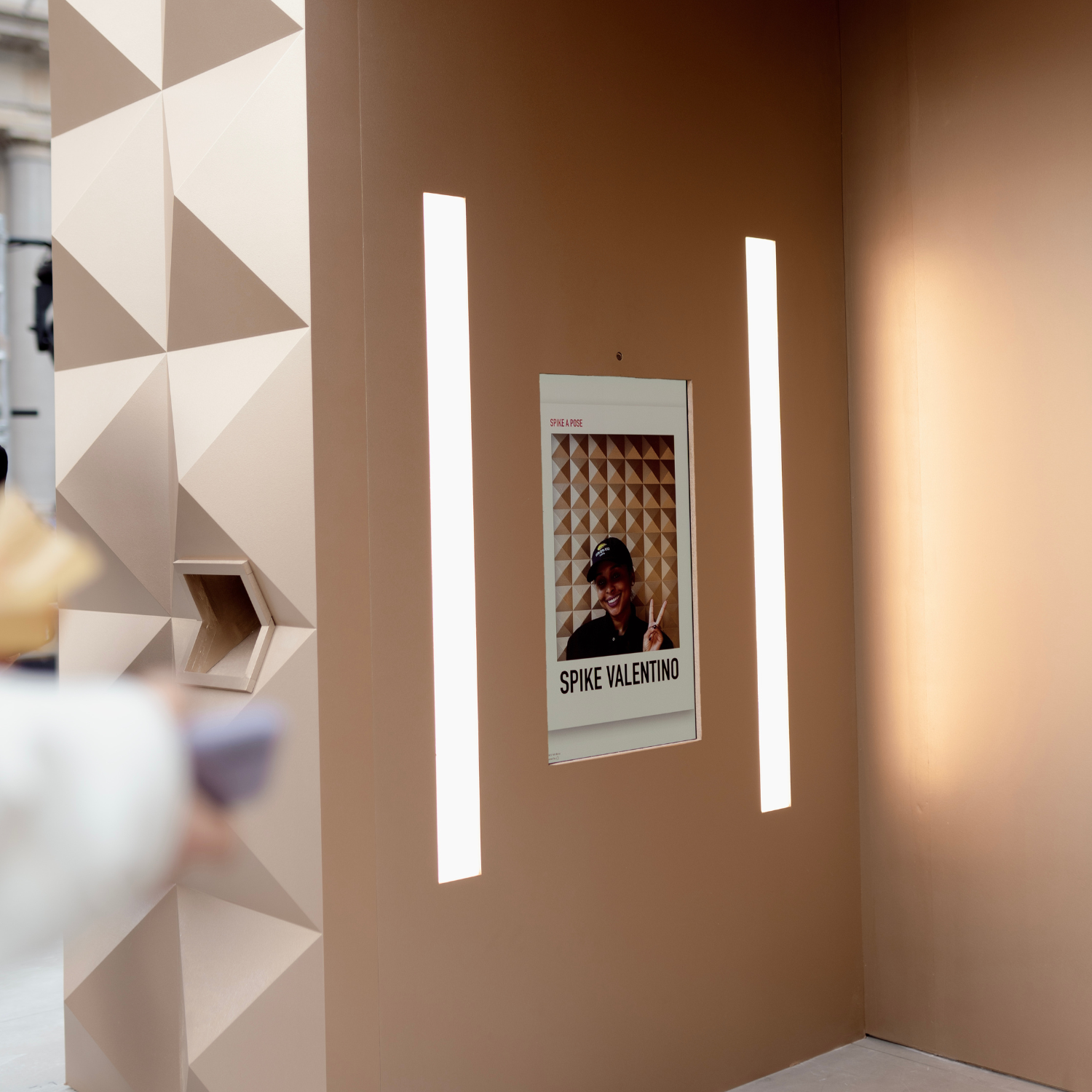
Retail screens still announce promotions and introduce collections, but increasingly they also help shoppers explore products, compare options, or take part in a brand experience. The shift is from displaying information to giving people a reason to interact with it.
That does not mean every screen needs a camera or a touchscreen. A window display has only a moment to catch a passerby’s attention. A screen beside a product display can offer more detail. The most effective digital signage fits the store, the shopper’s needs, and the task at hand.
What Are the Latest Retail Digital Signage Trends?
Retail digital signage is evolving from scheduled promotional content into a more active part of the shopping journey. Screens can now invite shoppers to interact, guide product discovery, and connect in-store campaigns with mobile experiences.
Interactive Retail Signage and AR Try-On
Interactive signage gives shoppers a role in the experience. They might browse products, scan a code, try on a digital look, or create a photo to take away. The interaction can make a campaign more memorable, provided it is easy to understand and worth the shopper’s time.
At Nike’s JD flagship store on Oxford Street, an AR mirror transformed visitors’ reflections with sneaker-inspired digital masks. Shoppers could try on the designs and receive a printed photo. The screen became part of the campaign itself, rather than just a surface carrying its message.
AI-Powered Personalization and Product Recommendations
In retail, personalization is most useful when it helps someone make a choice. A screen might guide a shopper through product options, suggest a relevant item, or support a consultation.
At Shu Uemura’s Omotesando Hills flagship in Tokyo, an AI mirror combines real reflective glass with 3D facial analysis to support makeup artists during consultations. The technology adds guidance while keeping the interaction between customer and artist at its center.
In-Store Retail Media and Sponsored Screen Content
Retail screens can promote a store’s own products or carry campaigns from brand partners. This creates new possibilities for retailers, but it also puts pressure on measurement. Brands need to understand what a screen placement delivered.
IAB Australia’s 2026 retail media report identifies measurement as an ongoing challenge for the sector. For digital signage, that means agreeing in advance on what counts as exposure, engagement, or a business outcome.
QR Codes and Mobile-Connected Shopping Experiences
A screen can open a path beyond the store. QR codes can lead to product details, a mobile experience, or a downloadable campaign photo. Virtual try-on can help a shopper shortlist products before trying them on in person.
For the BOSS Golf collection, an AI try-on mirror let visitors compare looks and select favorites to try physically. Shoppers could also receive a branded photo and enter a prize draw. The screen connected digital discovery with the fitting-room journey.
Which Digital Signage Technologies Are Used in Retail?
Retail digital signage can involve commercial displays and LED screens, touchscreens and kiosks, interactive mirrors, QR codes, content management software, analytics tools, and, in some experiences, AI, augmented reality, or computer vision.
The technology matters less than what it enables. A video screen can introduce a new collection. A product finder can help shoppers navigate a large assortment. An interactive mirror can let someone visualize a product before trying it physically. The choice should follow the customer task.
LOOOK.AI is a smart mirror platform that transforms traditional digital signage into interactive AR- and AI-powered experiences. Its software can run on screens, kiosks, and storefront displays, inviting shoppers to try on products, explore recommendations, or interact with branded content. Retailers can manage and update experiences remotely across locations.
AR can make a storefront feel more responsive. Kiehl’s used an AR window experience to visualize skin concerns and invite passersby inside. The case reports 3,118 interactions, 17 activations per hour, and a 20% increase in foot traffic during the activation.
AI can also support product exploration. For the H&M × Stella McCartney collection launch in Lima, LOOOK.AI created a real-time AI clothing try-on experience that let visitors explore looks through a screen. The format offered a way to browse more of the collection before deciding what to try next.
How Can Retail Digital Signage Help Shoppers Discover Products and Make Decisions?
Good signage responds to its setting. A storefront message needs to register quickly. A screen inside the store can help shoppers compare products or explore a collection in more depth.
Content might include new arrivals, short product videos, product demonstrations, recommendations, comparisons, or promotions. Interactive experiences can add virtual try-on, product finders, or shareable photos. In each case, the screen should make the next step clear: explore, scan, try, compare, or ask for help.
Fendi’s Istanbul Airport activation combined several of these ideas. An AR mirror let travelers try on sunglasses and receive a printed photo. LOOOK.AI reports that more than 400 photos were printed, the sunglasses line sold out during the activation, and sales grew 43% year over year compared with a non-AR version.
Those results belong to a particular campaign and environment. Their broader lesson is that an experience can connect attention with a product action, and that retailers should measure both.
How Do You Measure ROI on Retail Digital Signage?
The right measure depends on the screen’s purpose. A campaign designed to build awareness might track reach or recall. Product discovery might be measured through views, try-ons, or QR scans. A sales-focused campaign could look at conversion, promoted-product sales, or average order value.
The important distinction is between activity and impact. An activation count is not necessarily a count of unique shoppers. A scan does not prove a purchase. A sale made while a screen is running is not automatically a sale caused by it.
Where possible, compare campaign results with a baseline, a similar store, or a comparable period. Define metrics before launch and keep their definitions consistent. This makes it easier to understand whether the screen helped, and what to adjust for the next campaign.
How Do You Choose Digital Signage Software for Retail?
Software shapes how easily a retailer can run an experience across stores. The basic requirements may include remote content updates, scheduling, screen management, and reporting. Interactive campaigns may also need support for touch input, cameras, QR links, product catalogs, or inventory connections.
Retailers should check what the platform can measure and how it handles data, as well as who will manage content and resolve technical issues. Reliability, permissions, privacy, support, and total cost matter alongside features. A system designed for video playback may not be suited to virtual try-on. A more complex platform may be unnecessary for a simple promotional screen.
The best choice is the one that supports the intended experience and fits the retailer’s day-to-day operation.
The Screen Should Earn Its Place
Digital signage is most compelling when it does something useful for the shopper. That might mean catching a passerby’s eye, making product discovery easier, or helping someone choose between options. The technology can vary. The question remains: does the screen add something to the visit that a static message could not?
FAQs
What is retail digital signage?
Retail digital signage uses digital screens in stores, windows, kiosks, or other retail spaces to display content such as promotions, product information, videos, and interactive experiences.
What content works best on retail screens?
It depends on where the screen is and what shoppers need there. Storefronts benefit from clear, eye-catching messages. Screens inside the store can offer product videos, comparisons, recommendations, promotions, or interactive catalogs.
What should retailers look for in digital signage software?
Look for software that supports the intended screen formats, remote content updates, screen management, relevant integrations, and useful reporting. For interactive experiences, check which features and metrics are supported.
What does LOOOK.AI do?
LOOOK.AI is a smart mirror platform that turns digital screens into interactive AR- and AI-powered experiences. Its formats include AI digital signage, kiosks, smart mirrors, storefront displays, photobooths, and billboards.
Can LOOOK.AI work with existing retail screens?
In many cases, LOOOK.AI can add AI-powered features to existing retail displays, kiosks, storefront screens, or mirror setups. The specific requirements depend on the screen and the experience.
What retail cases has LOOOK.AI worked on?
Examples include Nike’s AR mirror activation at the JD flagship store, Shu Uemura’s AI mirror in Tokyo, and H&M × Stella McCartney’s AI clothing try-on experience in Lima.